


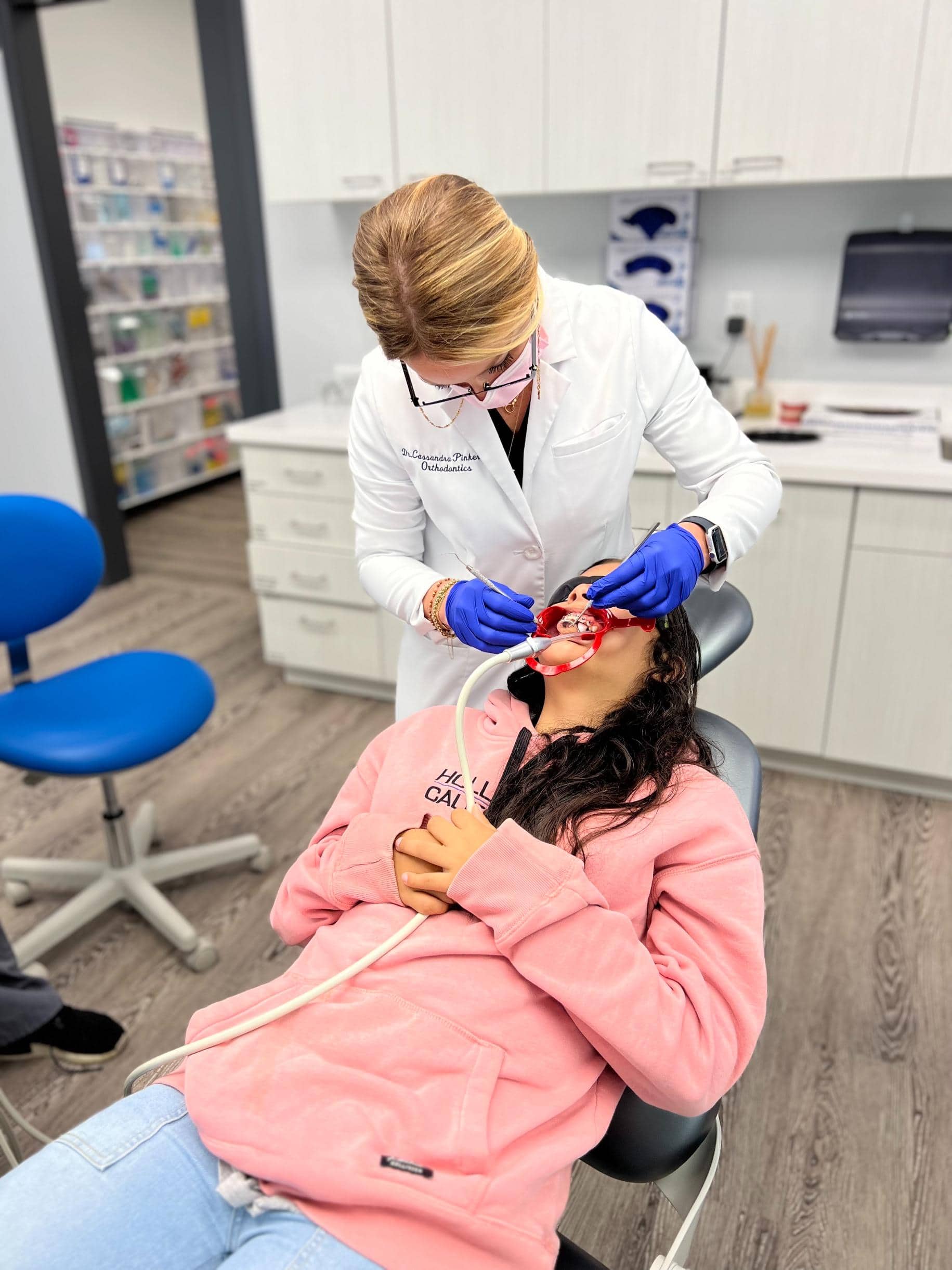
What Is Sleep Apnea and How Does It Relate to Orthodontics?
Sleep apnea is a condition where breathing repeatedly stops during sleep, most often due to airway obstruction. Treatment options in orthodontics can help by correcting structural causes like narrow palates and recessed jaws that restrict airflow, offering a path toward better breathing and more restful sleep.
Obstructive sleep apnea (OSA) is the most common type, and it happens when the soft tissues in your throat relax too much during sleep. This causes you to stop breathing for brief periods throughout the night, sometimes dozens of times per hour.
Jaw structure, teeth, and palate shape play a significant role in how well you breathe at night. A narrow upper jaw, a recessed lower jaw, or severe crowding can all reduce the size of your airway. When there’s less room for air to flow, you’re more likely to experience breathing interruptions during sleep.
There are three types of sleep apnea: obstructive (caused by physical blockage), central (caused by brain signaling issues), and mixed (a combination of both). Orthodontics specifically targets the structural causes of obstructive sleep apnea. According to the American Academy of Sleep Medicine (AASM), an estimated 30 million adults in the United States have obstructive sleep apnea (AASM, 2014). Many of these cases have an underlying structural component that orthodontic intervention can address.
How Orthodontics Can Help Address Sleep Apnea Symptoms
Orthodontics addresses sleep apnea by correcting structural concerns, including narrow palates, recessed jaws, and crowding, that restrict the airway. The main approaches include palatal expansion, mandibular advancement, bite correction, and early intervention for children.
How Does Palatal Expansion Help?
One of the most effective orthodontic approaches for sleep apnea involves widening the upper jaw. A narrow palate doesn’t just affect your smile. It also limits the space in your nasal passages. Palatal expanders gradually widen the upper jaw, increasing the volume of your nasal airway and making breathing easier. It works especially well for kids, since their bones are still growing and respond quickly to expansion.
What Is Mandibular Advancement?
Some orthodontic appliances hold your lower jaw in a slightly forward position. This prevents the tongue and soft tissues from falling back and blocking your airway during sleep. An orthodontist can custom-fit these devices, and they’re often recommended for smiles with mild to moderate OSA.
Can Correcting Bite Concerns Improve Breathing?
Braces and clear aligners do more than improve your smile. By correcting crowding, crossbites, and other alignment concerns, treatment options can improve the overall relationship between your upper and lower jaws. Better jaw alignment often means more room for your tongue and a more open airway.
Why Is Two-Phase Treatment Important for Children?
Early orthodontic evaluation is especially important for children who snore, breathe through their mouths, or show other signs of sleep-disordered breathing. Two-phase treatment can guide jaw development during critical growth periods, and this proactive approach often prevents sleep apnea from developing or worsening as your child gets older.
Getting the right diagnosis matters. An experienced orthodontic team works alongside sleep medicine specialists to make sure you receive a proper sleep study before starting treatment. That way, the actual cause of your symptoms is being addressed rather than guessed at.
Benefits of Orthodontic Sleep Apnea Treatment
What Are the Advantages Over Other Treatment Options?
Choosing orthodontics for sleep apnea comes with real, practical benefits that go beyond what symptom management alone can offer.
- Orthodontic appliances and treatment options work gradually without incisions or recovery time
- People who struggle with CPAP machines can find relief through oral appliances, no mask or tubing required
- Better airflow means fewer nighttime awakenings and more energy during the day
- This approach addresses the root cause rather than managing symptoms night after night
- Snoring often decreases significantly, which your sleep partner will appreciate
How Can Early Treatment Options Benefit Children?
Guiding jaw growth during childhood helps prevent more severe sleep apnea from developing later. Sleep changes everything for kids. Those who rest better tend to perform better in school, have fewer behavioral concerns, and feel more energized throughout the day.
The goal isn’t just to help you sleep better tonight. It’s to make lasting changes to the structures that affect your breathing so you can enjoy better sleep for years to come.
Orthodontic Treatment vs. CPAP and Other Sleep Apnea Solutions
| Treatment Option | How It Works | Best For | Considerations |
|---|---|---|---|
| CPAP Machine | Delivers continuous air pressure through a mask | Moderate to severe OSA | Most widely recommended, but has compliance challenges |
| Oral Appliances | Repositions jaw to keep airway open | Mild to moderate OSA | Better tolerated, portable for travel |
| Orthodontic Treatment | Corrects underlying structural concerns | Smiles with jaw or palate abnormalities | Provides permanent changes |
| Surgery (UPPP, MMA) | Removes or repositions tissue and bone | Severe cases or CPAP failures | Most invasive, longer recovery |
CPAP therapy remains the gold standard for treating moderate to severe sleep apnea. However, research shows that roughly half of CPAP users struggle to use their machines consistently over the long term (Weaver & Grunstein, Sleep Medicine Reviews, 2008). The mask can feel uncomfortable. The noise bothers some people. Traveling with the equipment is inconvenient.
Oral appliances and orthodontic treatment options offer alternatives that many people find easier to stick with. A small appliance slips into your mouth at night without masks, hoses, or humidifiers. When you travel, it fits in your pocket.
The biggest advantage of orthodontics over other options? It can create permanent structural changes. CPAP manages your symptoms every night you use it. Orthodontics can actually reshape your jaw and palate so your airway stays open on its own.
That said, severe sleep apnea cases often still require CPAP or even surgery. The right approach depends on your specific situation, which is why a thorough evaluation from a qualified orthodontic specialist is so important.
Cost Factors for Orthodontic Sleep Apnea Treatment
Orthodontic sleep apnea treatment options typically range from $1,800 to $3,000 for oral appliances and $3,000 to $7,000 for full treatment with braces or aligners. Costs depend on the type of appliance, case complexity, treatment duration, and insurance coverage. Most treatments span 12 to 24 months, and medical insurance often covers oral appliances for smiles with diagnosed OSA.
Here are the main factors that influence cost:
- Type of appliance or treatment: simple oral appliances cost less than full treatment with braces or aligners
- Case complexity and duration: palatal expansion combined with braces takes longer than a mandibular advancement device alone
- Diagnostic requirements: a formal sleep study is typically needed before insurance will approve coverage
Medical insurance often covers oral appliances when they’re prescribed for diagnosed obstructive sleep apnea. Dental insurance coverage varies more widely. Many orthodontic practices offer low monthly payment options to help make treatment accessible. An online payment calculator can help you estimate what your investment might look like.
Who Is a Good Candidate for Orthodontic Sleep Apnea Treatment?
Orthodontic treatment options for sleep apnea work best for certain people. Here are the most common candidate profiles:
- Smiles with a sleep study showing mild or moderate obstructive sleep apnea
- People with structural concerns like a narrow palate or a recessed lower jaw
- Those who’ve tried CPAP and simply can’t tolerate it
- Children who snore loudly, breathe through their mouths, or show signs of restless sleep
- Adults looking for a permanent solution rather than nightly symptom management
Not everyone with sleep apnea is a candidate for orthodontics. Central sleep apnea involves brain signaling that structural changes won’t address. Severe obstructive sleep apnea often requires more aggressive intervention.
The only way to know for sure is through proper evaluation. A formal sleep study diagnoses the type and severity of your sleep apnea, and an orthodontic assessment with an orthodontist determines whether structural concerns are contributing to your symptoms.
Frequently Asked Questions About Orthodontics and Sleep Apnea
Can braces or Invisalign cure sleep apnea?
Orthodontic treatment options can significantly reduce sleep apnea symptoms by treating the structural causes that contribute to it, though they don’t “cure” the condition outright. That’s an important distinction. By widening your palate, improving jaw alignment, or correcting crowding, braces and aligners create more room for your airway. Many smiles see significant improvement after treatment.
How long does orthodontic treatment for sleep apnea take?
Most treatments take between 12 and 24 months. Palatal expansion in children is often faster, while treatment involving braces or aligners typically takes longer. Your orthodontist will give you a more specific timeline after your evaluation.
Do I still need a CPAP if I get orthodontic treatment?
That depends on severity. People with mild to moderate OSA are often able to discontinue CPAP after successful treatment. Those with severe sleep apnea will likely still need CPAP, though possibly at lower pressure settings. A follow-up sleep study after treatment will clarify what ongoing care you need.
Can children receive orthodontic treatment for sleep apnea?
Yes, and early intervention is often the most effective approach. The American Association of Orthodontists recommends children see an orthodontic specialist no later than age 7. A qualified orthodontic team can identify potential airway concerns and guide jaw development before they become more serious.
Will insurance cover orthodontic sleep apnea treatment?
Medical insurance often covers oral appliances when prescribed for diagnosed obstructive sleep apnea. Dental insurance coverage for orthodontics varies by plan. Documentation from a sleep study and a prescription from a physician are typically required. Your orthodontic team can help you understand your coverage options and work through the insurance process.
If you’re dealing with sleep apnea and wondering whether orthodontics could help, the first step is getting a proper evaluation. An orthodontist can assess your jaw structure, bite alignment, and breathing patterns to determine if orthodontic intervention could improve your sleep quality. Talk with your orthodontic team and sleep medicine provider to explore whether this approach is right for you.