



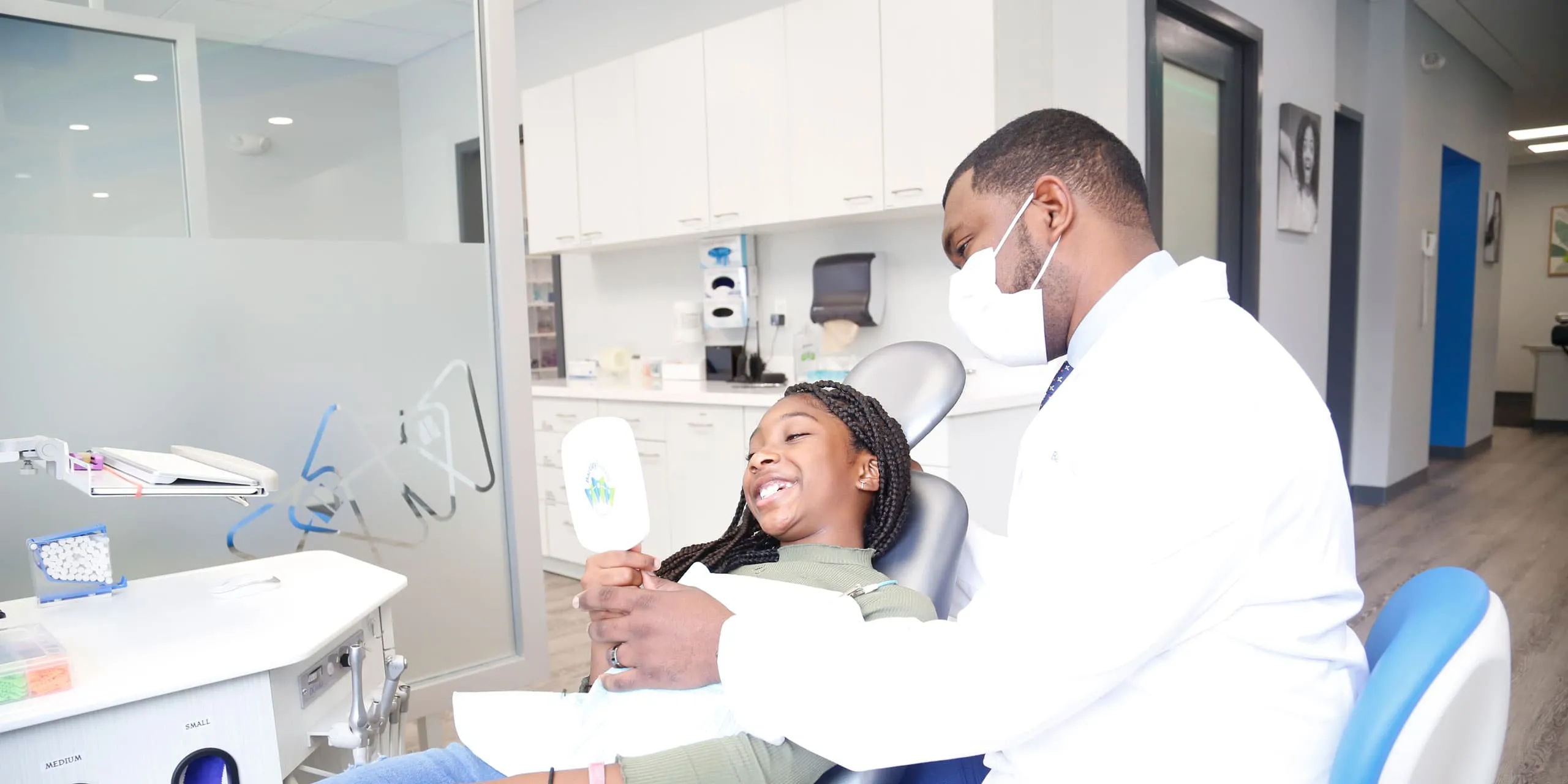
Invisalign for teens has become one of the most popular clear aligner options for adolescents in Bridgeport and across the country. If your teen needs orthodontic care, you’ve probably already heard the name. But as a parent, you want the full picture before making this decision for your child.
We’re breaking down how Invisalign Teen works, what it costs, who it’s right for, and what to realistically expect during the process.
What Is Invisalign for Teens and How Is It Different from Adult Invisalign?
Invisalign for teens is a clear aligner system by Align Technology designed specifically for adolescent smiles. It uses custom-made, nearly invisible removable trays to gradually improve your smile without metal brackets or wires. Your teen simply wears the trays over their teeth, switching to a new set as their smile progresses.
So what makes the teen version unique?
Align Technology built specific features for younger smiles whose mouths are still developing. Invisalign Teen includes eruption tabs, small spaces built into the aligners that accommodate teeth still coming in. This means care can often get started before all permanent teeth have fully emerged.
That’s a big deal for families who don’t want to wait. The system also includes blue compliance indicators on each aligner. These small dots fade from blue to clear with proper wear time, so parents can simply check the color to verify their teen is actually wearing the aligners as directed.
Teens lose things. It happens. That’s why Invisalign Teen includes up to six free replacement aligners throughout the process. If a tray gets lost at school or accidentally thrown away at lunch, you’re covered.
The technology behind Invisalign is FDA-cleared and backed by decades of clinical research. Clear aligner therapy is now a well-established option for appropriate candidates. A board-certified orthodontist trained in the latest Invisalign techniques can make sure your child is in experienced hands from day one.
How Invisalign for Teens Works: Step by Step
Understanding the process helps both parents and teens know exactly what to expect. Here’s how it works from start to finish:
The Free Consult
The process begins with a free consult at your orthodontist’s office. During this visit, advanced digital 3D scanning technology captures detailed images of your teen’s teeth. Gone are the messy putty impressions many parents remember from their own orthodontic days. The scan is quick, comfortable, and gives the team everything they need to start building a plan. If you have questions about insurance or payment, this is a great time to ask those too.
Building a Custom Plan
Using ClinCheck software, your orthodontist creates a precise digital plan. You’ll actually see a simulation of how your teen’s teeth will move and preview the projected final results. This technology allows for adjustments before a single aligner is made, which means fewer surprises down the road.
Receiving the Aligners
Once the custom aligners are fabricated, your teen receives their first sets. They’ll switch to a new tray every one to two weeks, depending on their specific plan. Each new aligner makes small, incremental adjustments to tooth position.
How Often Are Progress Check-Ins?
Visits happen every six to eight weeks. These are typically quick, just a check to make sure everything is progressing as planned. Most parents appreciate how little time these take compared to traditional braces adjustments.
Timeline to Completion
Average time in aligners runs 12 to 18 months for most teens, though this varies based on case complexity. Some straightforward cases finish sooner, while more involved corrections may take longer.
The critical requirement: Aligners must be worn 20 to 22 hours per day for optimal results. They only come out for eating, drinking anything other than water, and brushing teeth.
Key Benefits of Invisalign for Teens (and Why Parents Love It Too)
Clear aligners offer advantages that go beyond just improving your smile. Here’s what makes Invisalign particularly appealing for teenage smiles in Bridgeport and beyond:
Why Do Teens Prefer Clear Aligners?
Let’s be honest: teens care about how they look. Invisalign aligners are virtually undetectable, which means your teen can smile confidently in school photos, at prom, and during everyday social interactions. Many of their friends won’t even notice they’re in care.
And here’s something teens really appreciate: no food restrictions. With traditional braces, popcorn, hard candy, and chewy snacks are all off-limits. Since Invisalign aligners are removed for eating, your teen can enjoy all their favorite foods without worry. Pizza night stays on the menu.
Oral hygiene stays simple too. Brushing and flossing work exactly the same as before, with no threading floss under wires or using special brushes to clean around brackets. This typically means healthier gums and fewer cavities during the process, which is something every parent wants to hear.
How Does Invisalign Make Life Easier for Parents?
No brackets means nothing to break off, and no wires means nothing to snap or poke. Families often tell us that fewer unexpected trips to the orthodontist for repairs is one of their favorite perks. That matters when you’re already juggling a packed family schedule.
Sports and activities fit right in. Whether your teen plays football, soccer, or any contact sport, they can simply remove their aligners and wear a regular mouthguard. Musicians also find clear aligners more comfortable than braces when playing wind or brass instruments.
Then there are those compliance indicators we mentioned. They make a real difference. You can verify your teen is following through on their responsibilities without relying solely on their word. It’s a small feature that gives parents genuine peace of mind.
Invisalign vs. Traditional Braces for Teens: An Honest Comparison
Both Invisalign and traditional braces can achieve beautiful, healthy smiles. The right choice depends on your teen’s specific needs, lifestyle, and orthodontic case. Here’s an honest look at how they compare:
| Factor | Invisalign Teen | Traditional Braces |
|---|---|---|
| Appearance | Nearly invisible clear aligners | Visible metal or ceramic brackets |
| Comfort | Smooth plastic, no sharp edges | May cause initial irritation from wires/brackets |
| Removability | Fully removable for eating and cleaning | Fixed, worn 24/7 |
| Food Restrictions | None (aligners removed for meals) | Yes (avoid hard, sticky, and chewy foods) |
| Oral Hygiene | Normal brushing and flossing | Requires extra time and special tools |
| Office Visits | Every 6-8 weeks | Every 4-6 weeks |
| Teen Responsibility | High (must wear aligners 20-22 hours daily) | Low (braces work automatically) |
| Best For | Mild to moderate cases, responsible teens | Complex cases, teens who may forget to wear aligners |
When Might Braces Be the Better Choice?
Traditional braces often work better for teens with severe crowding, significant bite issues, or complex tooth rotations. They’re also a smart choice if you’re concerned about your teen’s ability to consistently wear removable aligners. Braces work around the clock without any effort from your teen. Once they’re on, they’re doing their job whether your teen remembers or not. For some families, that reliability is worth the trade-off in aesthetics. A board-certified orthodontist can evaluate your teen’s specific case and help you weigh the options.
When Does Invisalign Shine?
For mild to moderate orthodontic cases, Invisalign offers clear aesthetic and lifestyle advantages. Teens who are responsible, motivated, and willing to commit to wearing their aligners see excellent results. The key takeaway? Both options work well when matched with the right candidate. A free consult is the best way to determine the right fit, so you never have to guess.
How Much Does Invisalign for Teens Cost? Factors That Affect Pricing
Invisalign for teens typically costs between $3,000 and $7,000, which is frequently comparable in price to traditional braces. The exact price depends on several factors specific to your teen’s case and your location.
Case complexity plays the biggest role. Straightforward spacing or mild crowding costs less than treating significant bite issues or severe misalignment, since more complex cases require more aligners and longer time in care. How long your teen wears aligners matters too, because a longer timeline means more trays and more office visits.
Where you live also affects pricing. Orthodontic fees vary by region, and Bridgeport families may see different rates than those in larger metro areas. The orthodontist’s experience and credentials can influence cost as well. Board-certified orthodontists with extensive Invisalign experience, such as those who hold Platinum or Diamond provider status, may charge differently than general dentists offering the same aligners.
Does Insurance Cover Invisalign for Teens?
Here’s something many parents don’t realize: most dental insurance plans that cover orthodontic care cover Invisalign the same as traditional braces. Check with your insurance provider to understand your specific benefits.
Many orthodontic practices in the Bridgeport area, including Bartley Family Orthodontics, offer low monthly payment plans and flexible financing options to help make care simple & affordable regardless of your budget.
The best way to get an accurate cost estimate? A consultation with an orthodontist can provide a personalized plan with clear pricing and no surprises.
Is Your Teen a Good Candidate for Invisalign? Signs to Look For
Not every teen is right for Invisalign, but many are. Here’s how to get a sense of whether clear aligners might work for your child, based on what board-certified orthodontists typically evaluate:
What Makes a Teen a Good Candidate?
- Mild to moderate orthodontic issues. Crowding, spacing, overbites, underbites, and crossbites can all respond well to Invisalign in many cases.
- Most permanent teeth erupted. While eruption tabs accommodate some teeth still coming in, the majority of adult teeth should be present.
- Maturity and responsibility. This is the big one. Your teen must commit to wearing aligners 20 to 22 hours daily. That means putting them back in after every meal and not “forgetting” them at home.
- Good oral hygiene habits matter too. Teens need to brush after eating before reinserting aligners. Those who already take care of their teeth tend to do well with Invisalign.
When Might Invisalign Not Be Ideal?
- Severe skeletal discrepancies requiring jaw surgery or complex orthodontic mechanics
- Very complex tooth rotations or movements
- Teens who struggle with responsibility or are unlikely to wear aligners consistently
If any of these apply, traditional braces may deliver better results. Worth discussing at a free consult.
How Can You Know for Sure?
An evaluation with a board-certified orthodontist is the best way to determine candidacy. During a free consult, the orthodontist examines your teen’s teeth, bite, and jaw alignment to recommend the most effective approach. Bridgeport families can find experienced Invisalign providers who treat teens with both clear aligners and traditional braces, and who will give you an honest assessment of which option will deliver the best results for your teen’s specific situation.
Frequently Asked Questions About Invisalign for Teens
Can my teen play sports with Invisalign?
Absolutely. Just remove the aligners before practice or games and wear a standard protective mouthguard. This is actually a real advantage over braces, which require special orthodontic mouthguards. After the activity, aligners go right back in.
What happens if my teen loses an aligner?
Invisalign Teen includes up to six free replacement aligners for exactly this reason. If a tray gets lost, reach out to your orthodontist’s office. The team will advise whether to move to the next set or wait for a replacement, depending on where your teen is in the process. Either way, it’s a quick resolution.
How do I know if my teen is wearing them enough?
Each Invisalign Teen aligner has blue compliance indicators, small dots that fade from blue to clear with proper wear time. If the dots are still blue after a week or two, your teen hasn’t been wearing the aligners enough. Simple visual check. Takes two seconds.
Will Invisalign affect my teen’s speech?
Most teens speak normally throughout the process. Some notice a slight lisp during the first few days with new aligners, but this typically resolves within a week as the tongue adjusts. By the second or third set of trays, most teens don’t even think about it.
Can my teen still eat their favorite foods?
Yes! Since aligners are removed for all meals and snacks, there are no food restrictions whatsoever. Popcorn at the movies, corn on the cob at summer barbecues, biting into apples without worry. Just brush teeth before putting aligners back in.
How often will my teen need orthodontist visits?
Most teens visit every six to eight weeks during Invisalign care. These visits are typically quick check-ins to make sure everything is progressing as planned. Compare this to traditional braces, which often require visits every four to six weeks.
If you’d like to learn more about getting started with Invisalign for teens in Bridgeport, a consultation with a board-certified orthodontist can answer your questions and help you figure out the best path forward for your teen’s smile.