



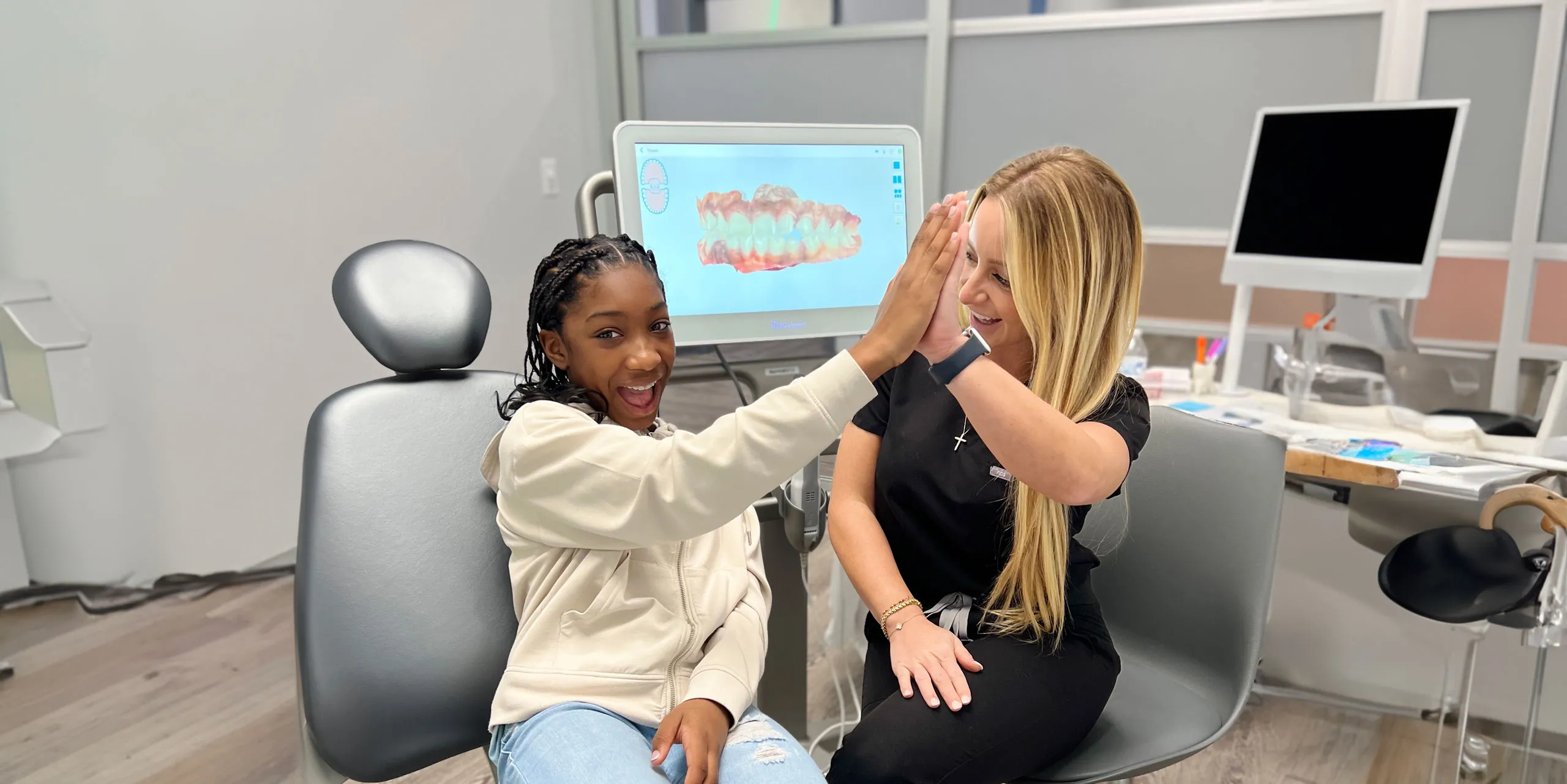
The American Association of Orthodontists recommends that every child have their first orthodontic screening by age 7. That’s earlier than most parents expect. This early visit isn’t about putting braces on young kids. It’s about catching potential issues while your child’s jaw is still growing and more responsive to guidance.
By this age, enough permanent teeth have come in to spot subtle concerns with bite alignment, spacing, and jaw development that might not be obvious to parents. Most children screened at age 7 won’t need immediate treatment. The visit simply gives you a clear picture of what’s happening and what to watch for. It’s a chance to see what’s developing and decide if or when to act, whether that means starting early intervention or simply monitoring growth over time.
What Is an Early Orthodontic Evaluation?
An early orthodontic evaluation is a screening visit designed for children around age 7, when a mix of baby teeth and permanent teeth are present. The goal isn’t to get started on treatment right away. Instead, it gives a board-certified orthodontist the chance to assess how your child’s teeth, jaw, and bite are developing during a critical growth window.
At this age, the jaw is still forming and permanent teeth are actively coming in. That combination makes it possible to identify concerns like crossbites, crowding, or jaw imbalances that may not be visible to the untrained eye. A child’s smile can look perfectly fine on the surface while underlying structural issues develop quietly.
During the screening, the orthodontist reviews tooth positioning, checks how the upper and lower jaws relate to each other, and looks for any habits (like thumb-sucking or mouth breathing) that could influence development. You get the information. You decide the timeline. That beats scrambling to react when something surfaces later.
What Happens at Your Child’s First Orthodontic Visit
During your child’s first visit, the orthodontist performs a visual exam, takes digital X-rays, discusses any concerns you’ve noticed, explains their findings, and sets a monitoring schedule if needed. The visit typically takes 30 to 45 minutes.
Here’s what you can expect in more detail:
- Visual examination. The orthodontist looks at your child’s teeth, jaw alignment, and how the upper and lower teeth come together when biting.
- Digital imaging. X-rays or panoramic images show teeth that haven’t erupted yet, helping identify crowding or impacted teeth before they become visible concerns.
- This is also your chance to mention anything you’ve noticed, like thumb-sucking habits, difficulty chewing, or teeth that look crowded. Bring up whatever’s on your mind.
- Clear explanation of findings. You’ll hear exactly what the orthodontist sees and whether any action is needed now or later.
- If everything looks good, your child will be placed on a growth-monitoring schedule. At Bartley Family Orthodontics, growth monitoring visits are included at no extra cost, so you can come back periodically while the orthodontist tracks development.
Your child won’t feel rushed, and you’ll leave with answers rather than more questions.
Benefits of Seeing an Orthodontist Early
Early orthodontic evaluation helps detect hidden bite, jaw, and spacing concerns while your child is still growing. Catching these issues during active development can shorten future treatment time, lower the total cost of care, and in some cases prevent the need for tooth extraction or corrective surgery during the teen years.
Spotting Hidden Issues Before They Worsen
Impacted teeth, crossbites, or narrow palates aren’t always visible when you look at your child’s smile. Orthodontists with years of advanced training beyond dental school can spot these before they worsen, often years before a parent or general dentist would notice.
How Jaw Growth Guidance Works
While your child is still growing, an orthodontist can influence how the jaw develops. This creates space for permanent teeth and can prevent crowding. The window for this type of guidance is limited, which is why timing matters.
Can Early Treatment Prevent Surgery?
Addressing skeletal issues early often eliminates the need for tooth removal or corrective jaw surgery during the teen years. Kids who receive early intervention also tend to spend less time in braces as teenagers because early corrections reduce the remaining work.
According to the American Association of Orthodontists (AAO), early evaluation allows board-certified orthodontists to identify issues and determine the best time to get started, which is often later than parents expect.
When Should Your Child First See an Orthodontist? Early Evaluation vs. Waiting
Every child’s situation is different, so this comparison is a simplification. Still, it’s a useful way to weigh your options:
| Factor | Early Evaluation (Age 7) | Waiting Until Teens |
|---|---|---|
| Detection | Catches crossbites, crowding, and jaw issues early | May miss issues that worsen over time |
| Jaw growth | Works with natural growth for correction | Less room to guide jaw development |
| Overall timeline | Two shorter phases spread over time | One longer phase during adolescence |
| Outcome | Monitoring or early intervention as needed | Treatment starts without prior assessment |
Not every child who gets evaluated early will need Phase 1 treatment. Many kids are simply monitored until their permanent teeth come in, and then they get started as teenagers. The difference is that these families have a plan and aren’t caught off guard by issues that could have been addressed years earlier.
For children with crossbites, severe crowding, or significant jaw discrepancies, early intervention can prevent these issues from becoming more serious. For kids whose teeth and jaws are developing normally? Waiting until the teen years works perfectly well. The key is getting that first screening so you know which category your child falls into.
What Does an Early Orthodontic Evaluation Cost?
Most orthodontic practices, including Bartley Family Orthodontics, offer free initial evaluations for children. If Phase 1 treatment is recommended, costs vary depending on the type and length of care, and many dental insurance plans cover a portion. Early detection often lowers total treatment expenses over time.
When you catch a developing issue while your child is young, it often means simpler, shorter care later. A crossbite corrected at age 8, for example, can eliminate the need for more involved treatment as a teenager.
And if treatment is recommended, you’ll have time to budget and plan rather than making a rushed decision. Knowing where your child stands early gives you the space to make informed choices about their oral health.
5 Signs Your Child Should See an Orthodontist Now
While age 7 is the general guideline, certain signs suggest your child should see an orthodontist sooner rather than later:
- Unusual timing of baby tooth loss. Losing baby teeth much earlier or later than peers can signal underlying issues with permanent tooth development. If your child lost their first tooth before age 4 or still hasn’t lost one by age 8, it’s worth getting a professional opinion.
- Difficulty chewing or mouth breathing. Struggling to bite into foods, chewing on one side, or breathing through the mouth regularly can affect jaw development and may point to a structural concern.
- Crowded or gapped front teeth. Visible overlapping or significant gaps between front teeth often point to space issues that benefit from early assessment.
- Jaw clicking or shifting. An underbite, overbite, or jaw that shifts to one side when your child bites down deserves professional evaluation. Jaw alignment concerns are easier to address during active growth, so don’t wait on this one.
- Prolonged oral habits. Thumb-sucking, pacifier use, or tongue-thrusting that continues past age 5 can push teeth out of alignment and reshape the palate.
If you notice any of these signs, schedule a free consult so an orthodontist can determine whether early intervention would help.
Frequently Asked Questions About Your Child’s First Orthodontist Visit
Is age 7 too young for braces?
Age 7 is not too young for an evaluation, but most children screened at this age are simply monitored until more permanent teeth come in. The screening helps identify whether early care would be beneficial or if your child can wait until their teen years for braces or clear aligners.
What if my child’s teeth look fine?
Teeth that appear straight can still have hidden issues beneath the surface. Jaw misalignment, developing crowding, and incoming permanent teeth aren’t always visible from the outside. An orthodontist uses X-rays and clinical expertise to see what’s happening below the gumline and predict how your child’s smile will develop.
Does my child need a dentist referral to see an orthodontist?
No. At Bartley Family Orthodontics, you can schedule an orthodontic evaluation directly without going through your child’s dentist first. While dentists often recommend orthodontic visits, you’re welcome to request a free consult on your own whenever you have questions about your child’s bite or tooth alignment.
What is two-phase treatment?
Two-phase orthodontic treatment addresses bite and alignment issues in two stages: Phase 1 (ages 7 to 10) guides jaw growth and creates space, and Phase 2 (teen years) aligns all permanent teeth with braces or aligners. The two phases are separated by a resting period where your child’s remaining permanent teeth come in naturally. Not every child needs both phases.
How long does the first visit take?
About 30 to 45 minutes. That gives the orthodontist enough time to examine your child, take any necessary images, discuss findings with you, and answer your questions. Your child will also have time to get comfortable in the office, which makes future visits feel more familiar and relaxed.